The Mediterranean table, in Tunisia.
Not a diet plan. A way of eating that's been practiced here for generations — markets, farms, olive groves, and a table that's always a little too generous.
It's a pattern, not a rulebook.
Mediterranean-style eating isn't one recipe or one restriction. It's a consistent pattern researchers keep coming back to — built around a handful of habits.
Vegetables & Fruit
The base of most meals, chosen by season rather than habit.
Legumes
Chickpeas, lentils and beans — often the protein at the center of a dish.
Whole Grains
Barley, wheat and bread made simply, without heavy processing.
Olive Oil
The primary fat across nearly every savory dish.
Fish & Seafood
Prepared the day it's caught, wherever the coast allows it.
Herbs & Spices
Flavor built from thyme, mint, harissa and cumin, not salt alone.
Minimally Processed
Ingredients you can recognize, prepared close to their natural state.
Shared Meals
Eaten slowly, at a table, with other people — part of the pattern itself.
Studied by major institutions. Lived every day in Tunisia.
Research
Research has consistently shown that the Mediterranean diet is effective in reducing the risk of cardiovascular diseases and overall mortality.
— Harvard T.H. Chan School of Public HealthWhat Carthage Table Offers
Meals inspired by these traditions, cooked with Tunisian ingredients, for the length of your stay.
Research
It's less of a diet, which is a restricted way to eat, and more of a lifestyle.
— Mayo Clinic StaffWhat Carthage Table Offers
A week or more living inside that lifestyle, not just reading about it.
Research on eating patterns describes population-level associations, not a personal medical outcome. Carthage Table is a culinary and cultural travel experience, not a medical program.
The ingredients behind the Mediterranean way of eating.
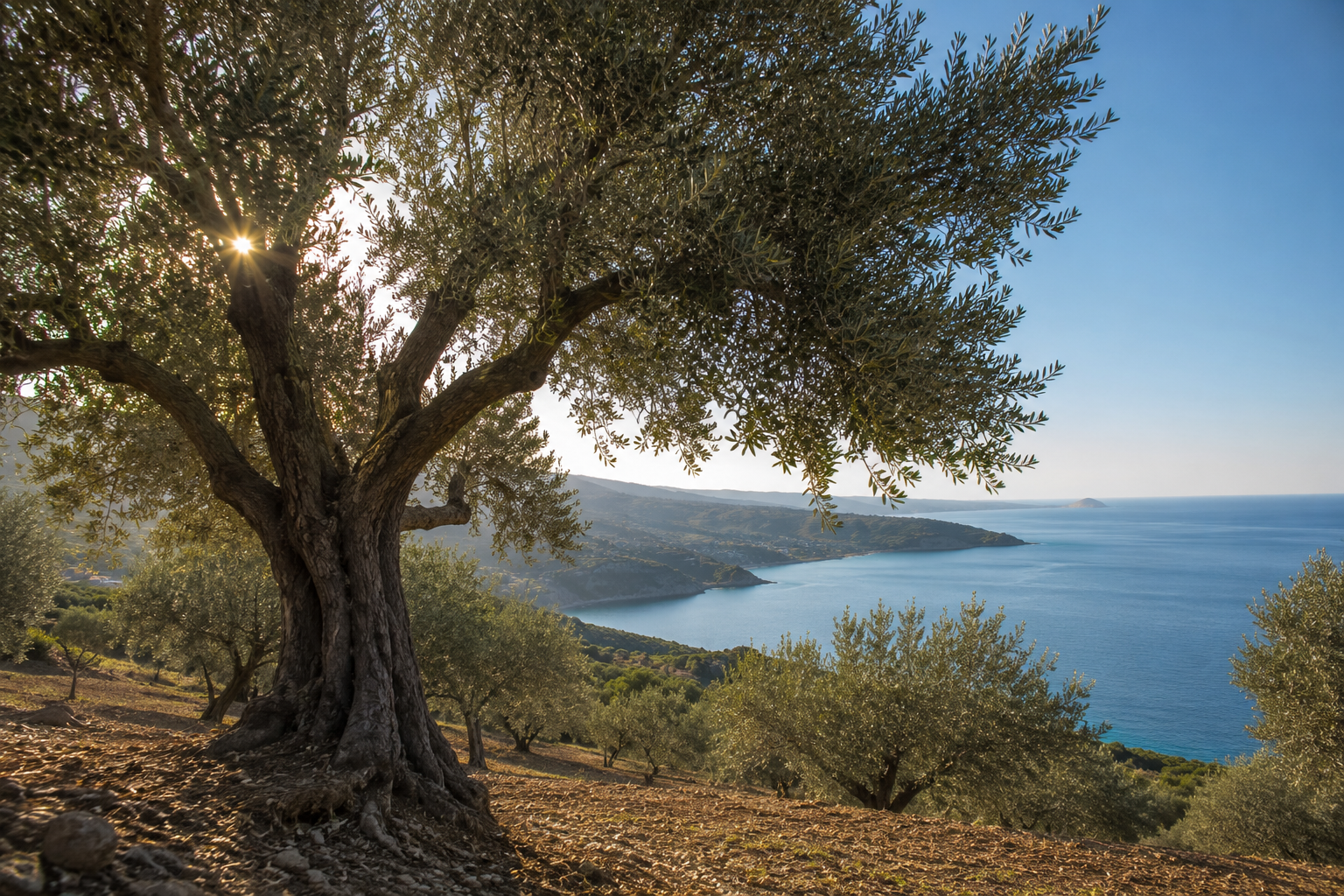
Olives
The tree this coast has kept for millennia.
Extra Virgin Olive Oil
The foundation of the Mediterranean table.
Sun-Dried Tomatoes
Preserved the way this coast always has.
Garlic
A simple ingredient at the heart of countless Mediterranean kitchens.
Chickpeas & Lentils
Legumes that carry a meal on their own.
Barley & Wheat
Ancient grains still found in traditional preparations.
Figs
Summer fruit enjoyed fresh, then preserved by drying.
Dates
Sweetness that needs nothing added to it.
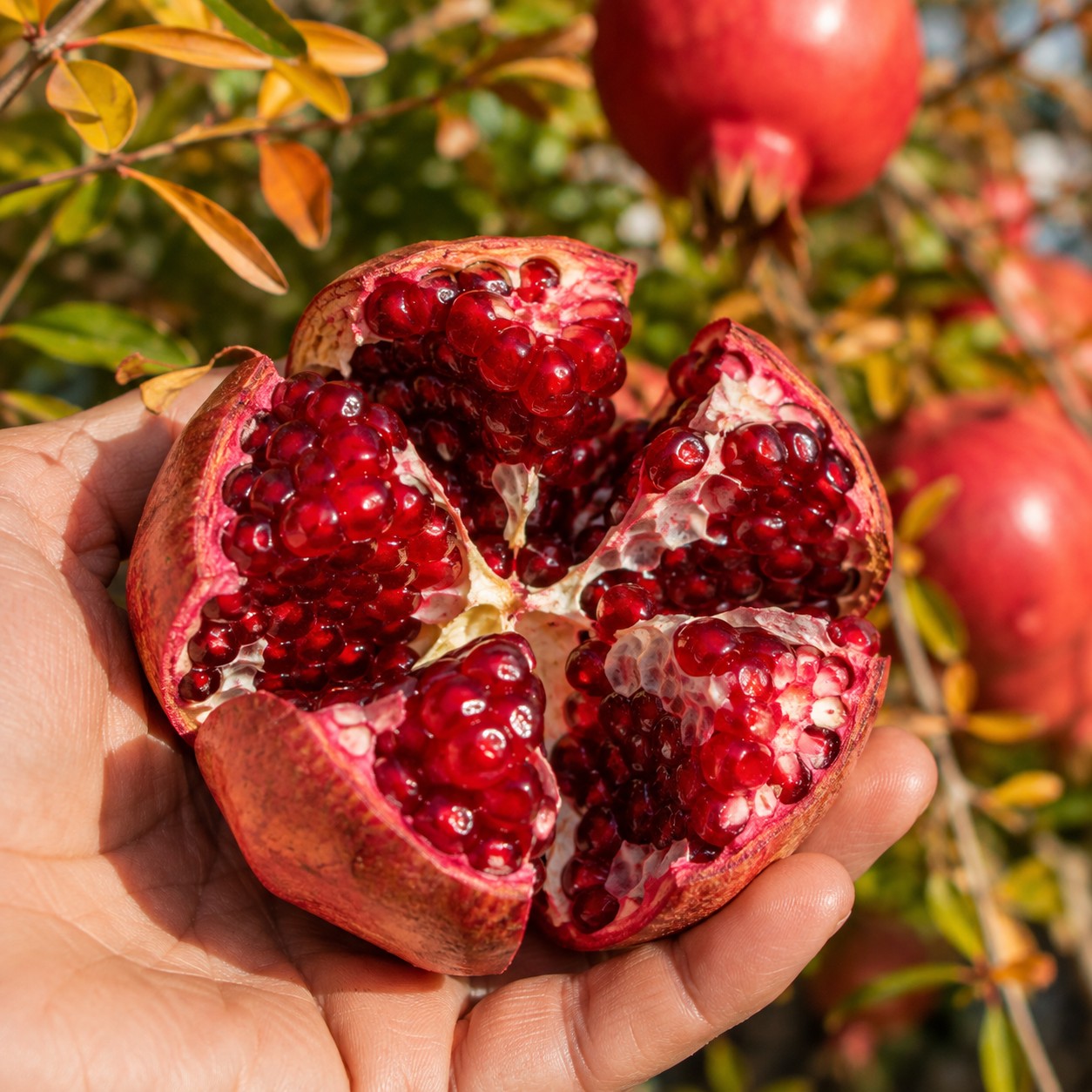
Pomegranates
Autumn's most patient fruit.
Almonds & Sesame
Texture and richness across sweet and savory alike.
Thyme, Rosemary, Mint
The herbs that season nearly everything here.
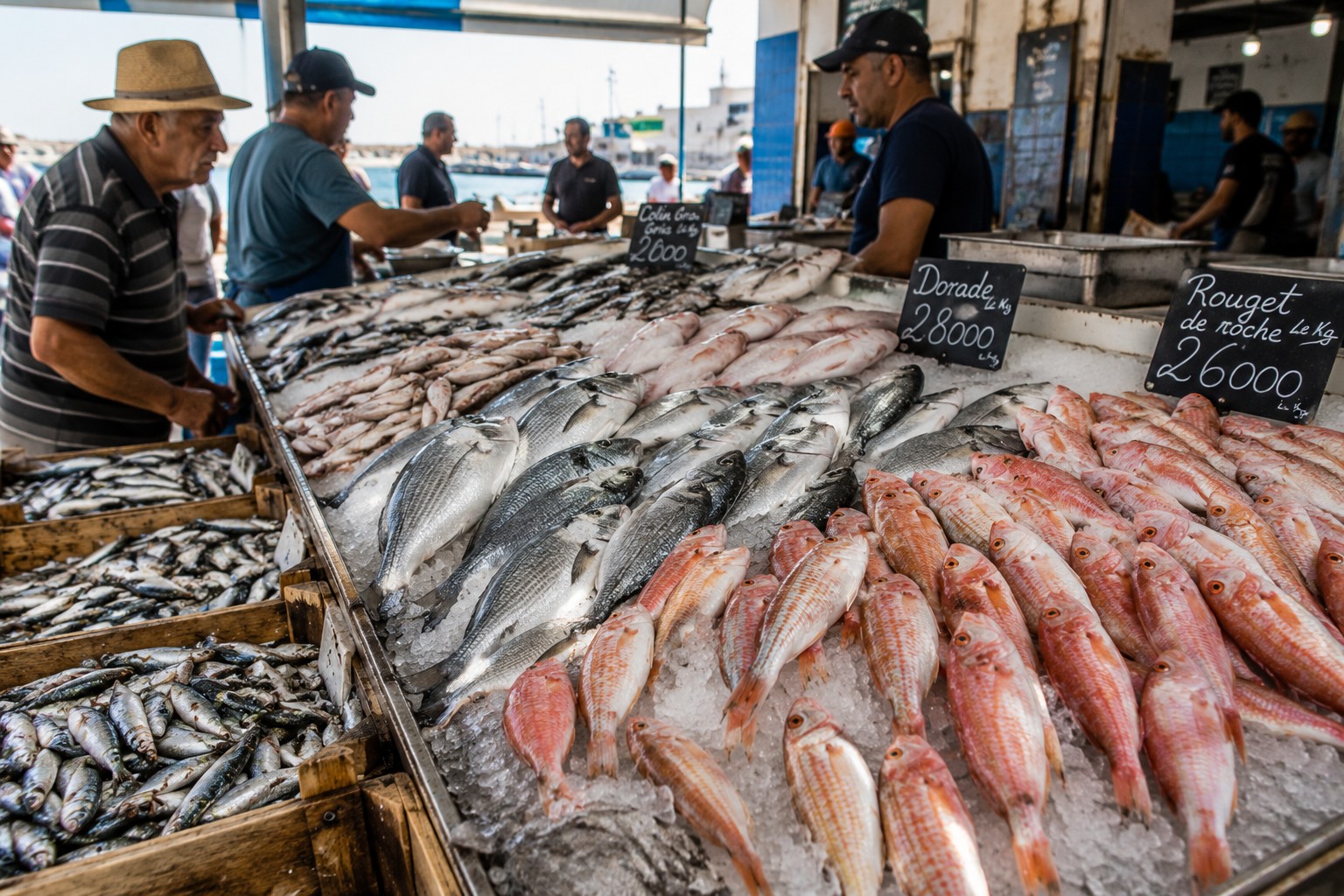
Fresh Fish & Sardines
From the boat to the table the same day.
The Mediterranean diet isn't abstract here. It's everyday tradition.
Beyond the ingredients shared across the whole Mediterranean, Tunisia has its own pantry — preparations you won't find described the same way anywhere else.
Bsissa
A traditional roasted-grain preparation, with real regional variation.
Zgougou
Aleppo pine seeds used in Tunisian culinary tradition.
Assida Zgougou
The prepared dish built from zgougou, tied to its own cultural context.
Sorghum (Droô)
A traditional grain still used in Tunisian kitchens.
Harissa
Peppers and spices, with real regional preparation traditions.
Tabouna Bread
Baked in a traditional clay oven, most days, most tables.
Tunisian Olive Oil
Oil with a specific place of origin, not an abstract ingredient.
Tunisian Legumes
The everyday backbone of the Tunisian table.
The table changes with the year.
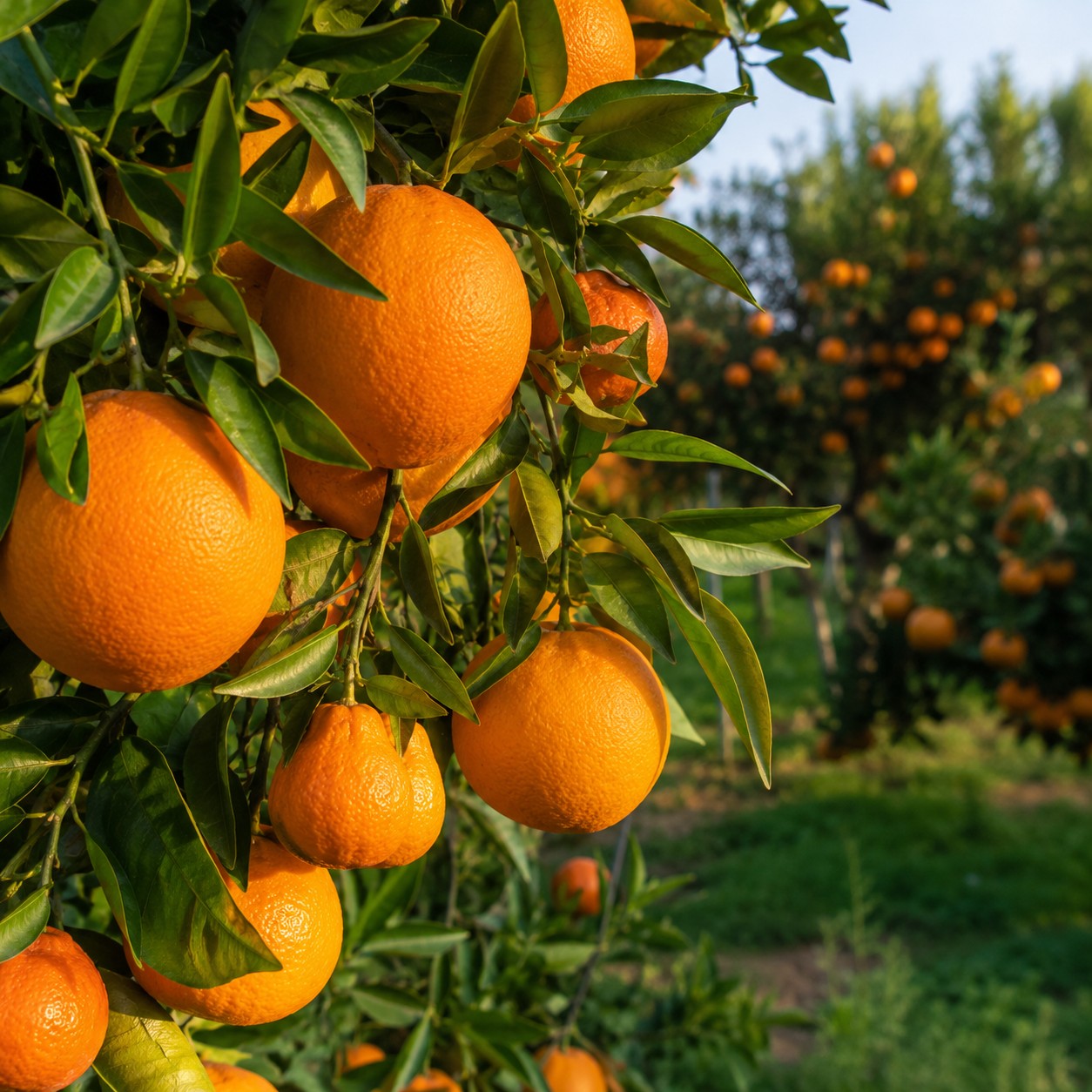
Winter
Dec – Feb
- Oranges
- Mandarins
- Lemons
- Dates
Provisional — to verify against current Tunisian harvest data.
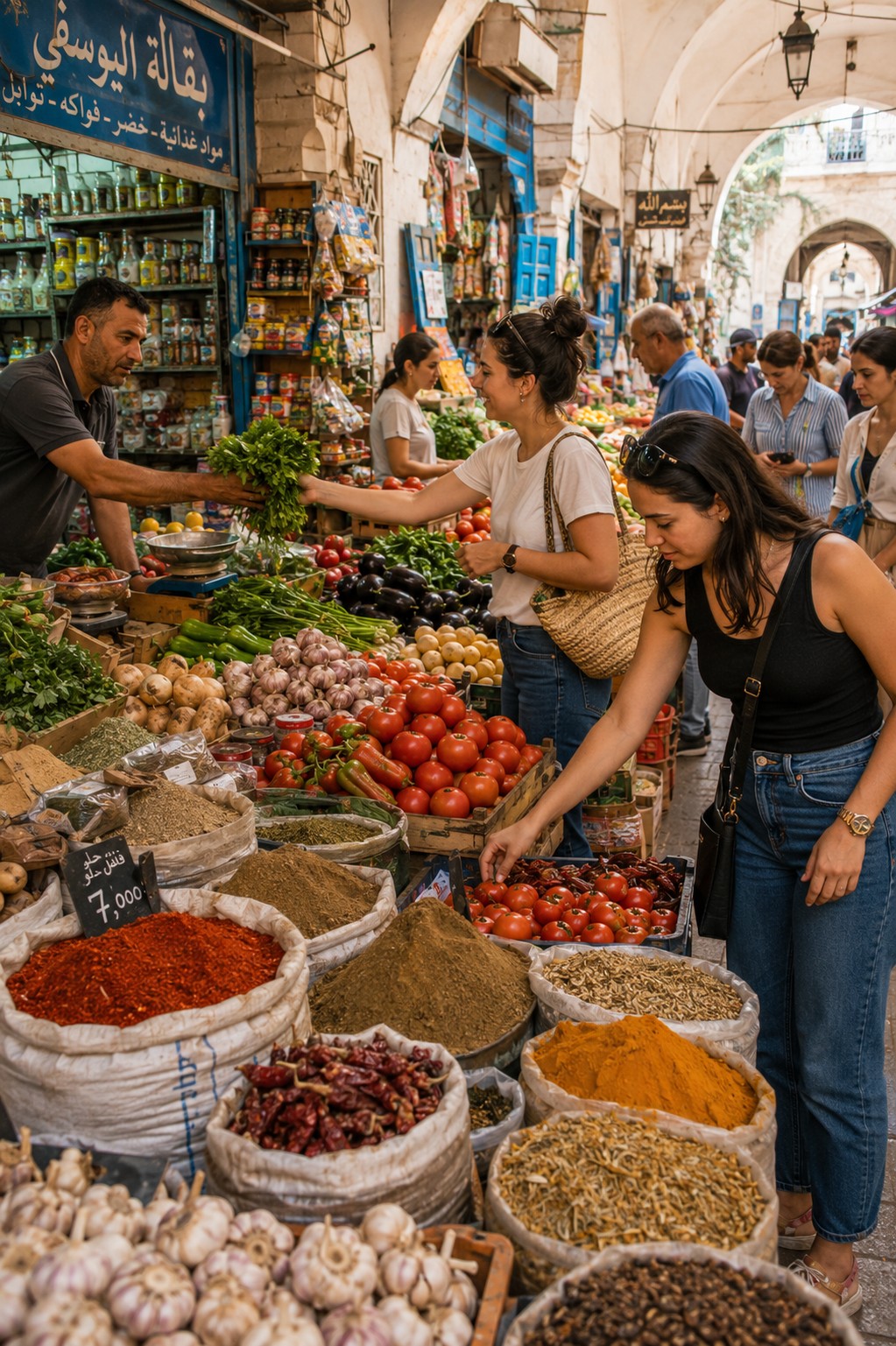
Spring
Mar – May
- Strawberries
- Artichokes
- Fresh peas
- New herbs
Provisional — to verify against current Tunisian harvest data.
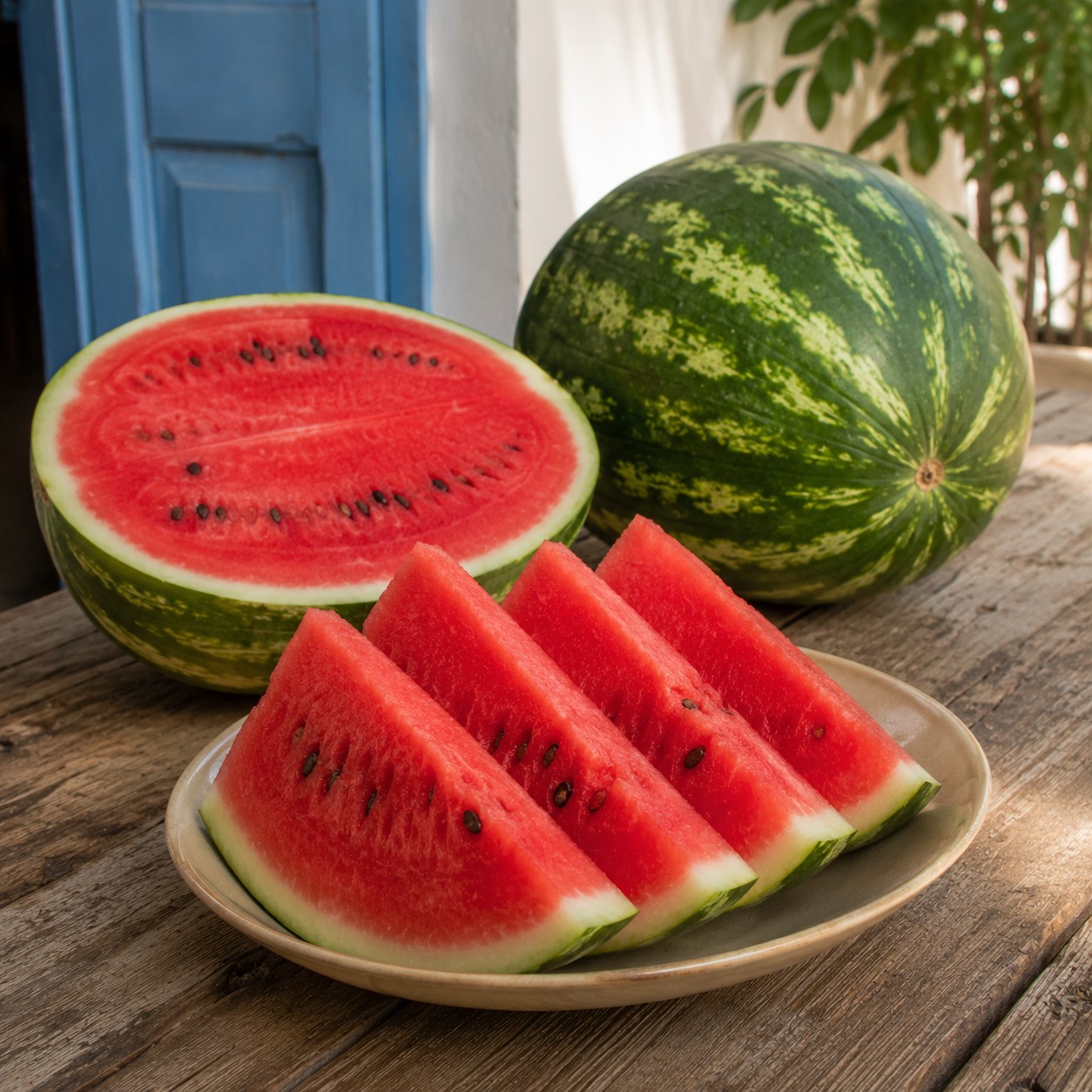
Summer
Jun – Aug
- Tomatoes
- Peppers
- Cucumbers
- Watermelon
Provisional — to verify against current Tunisian harvest data.
Autumn
Sep – Nov
- Grapes
- Figs
- Pomegranates
- Dates
Provisional — to verify against current Tunisian harvest data, incl. olive harvest timing.
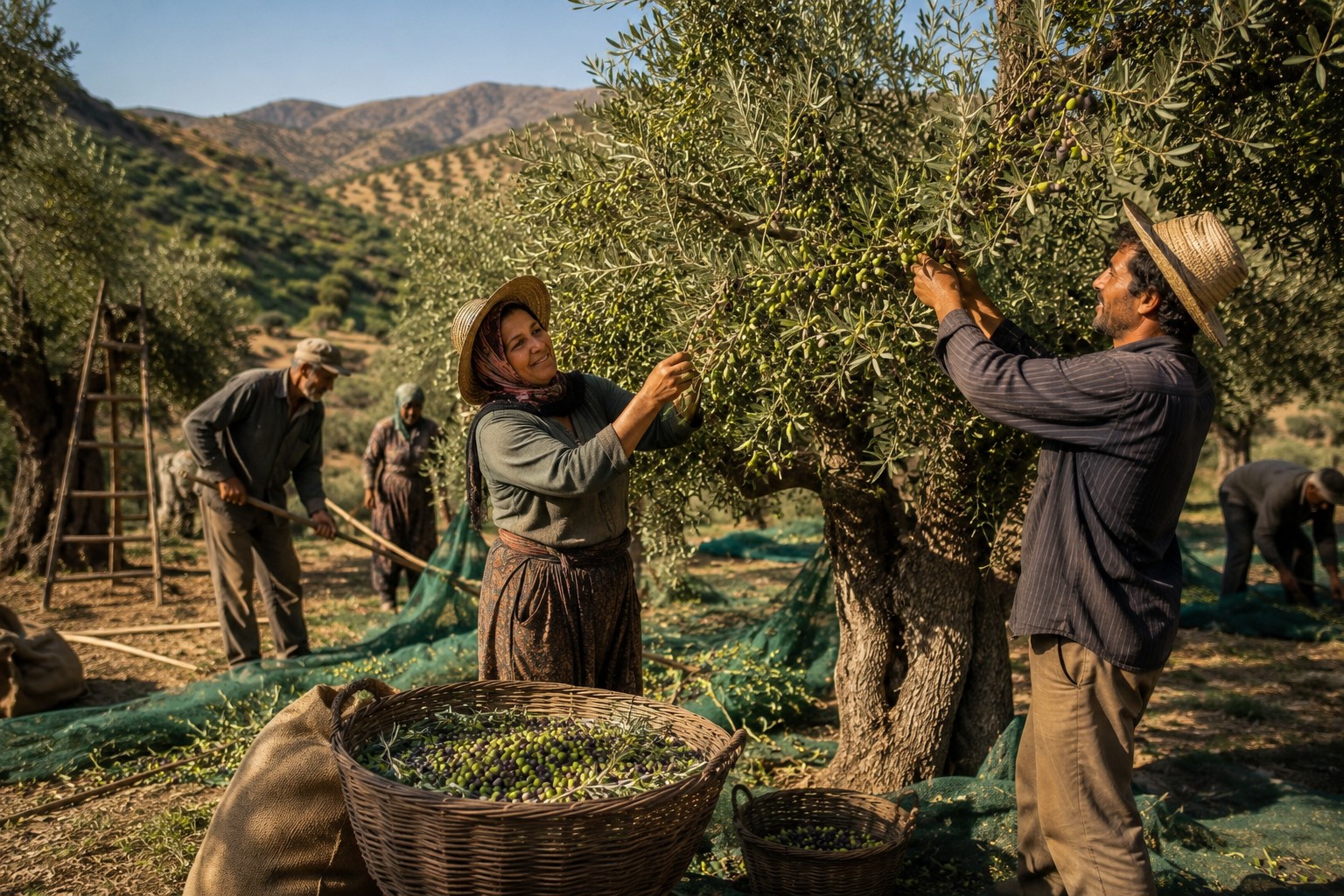
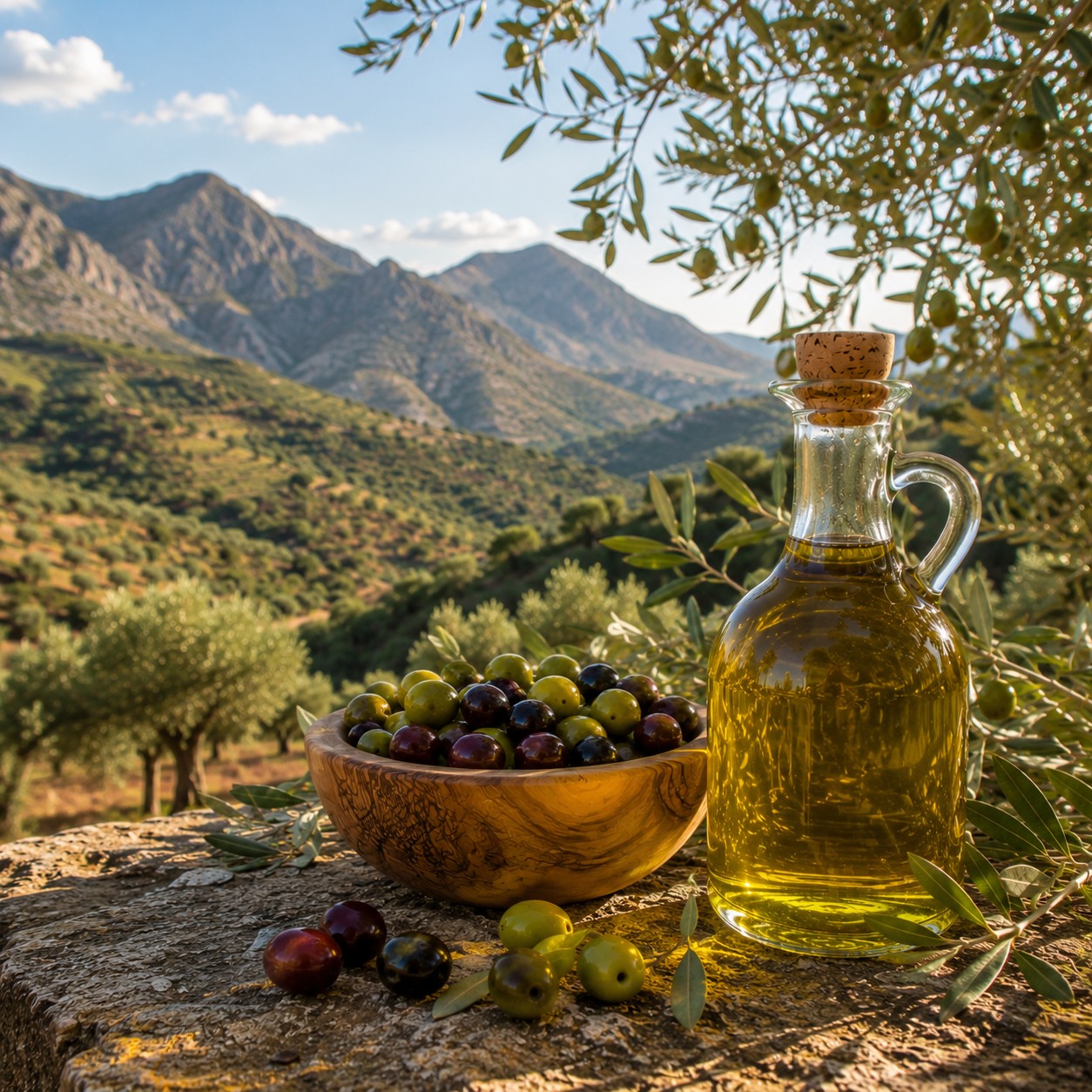
Tree, harvest, mill, table.
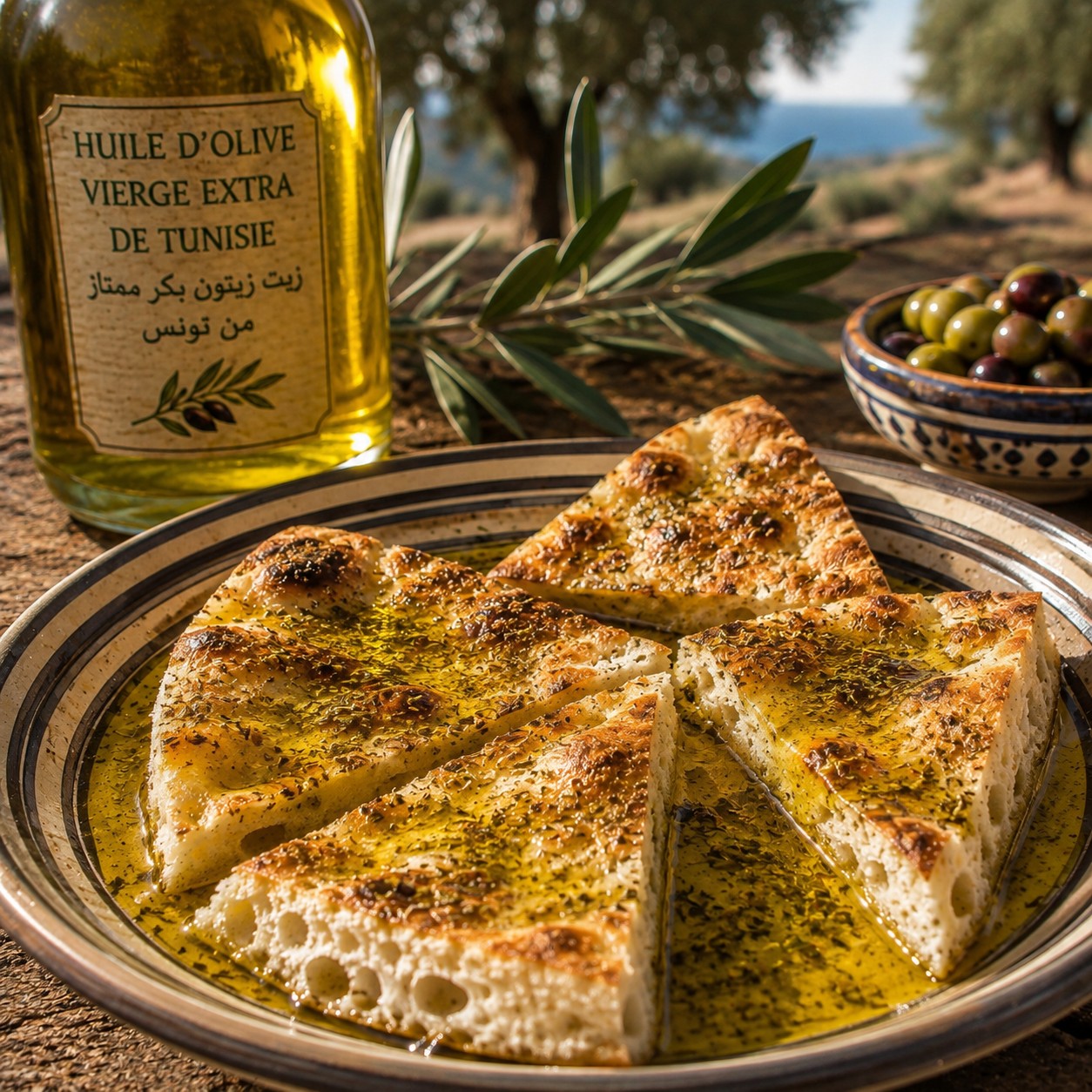
Some of Tunisia's olive trees have stood for centuries. The oil pressed from them isn't a souvenir — it runs through nearly everything you'll eat here.
The dishes you'll actually eat.
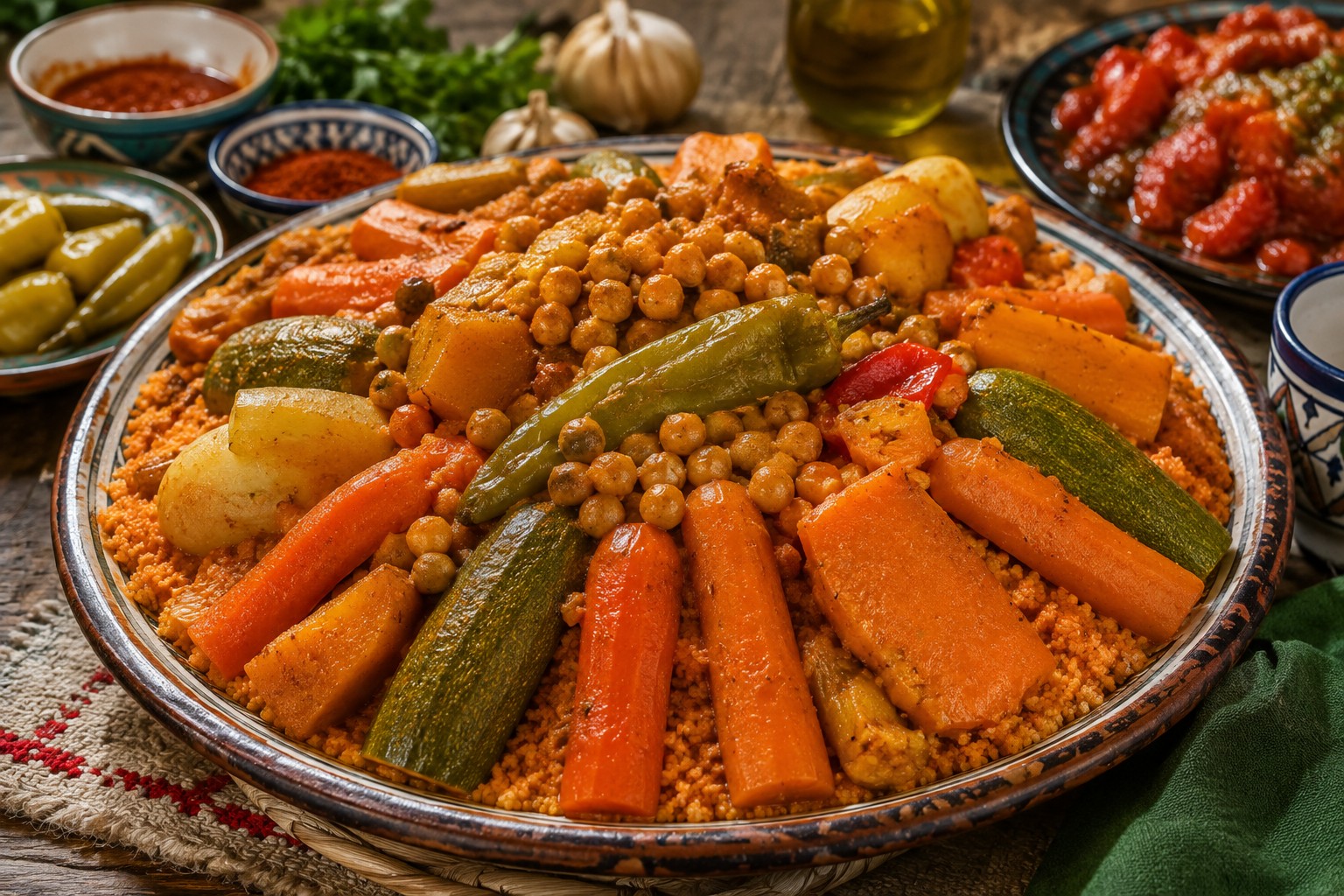
Tunisian Couscous
Steamed by hand, served generously with vegetables, chickpeas and whichever protein the season and coast suggest.
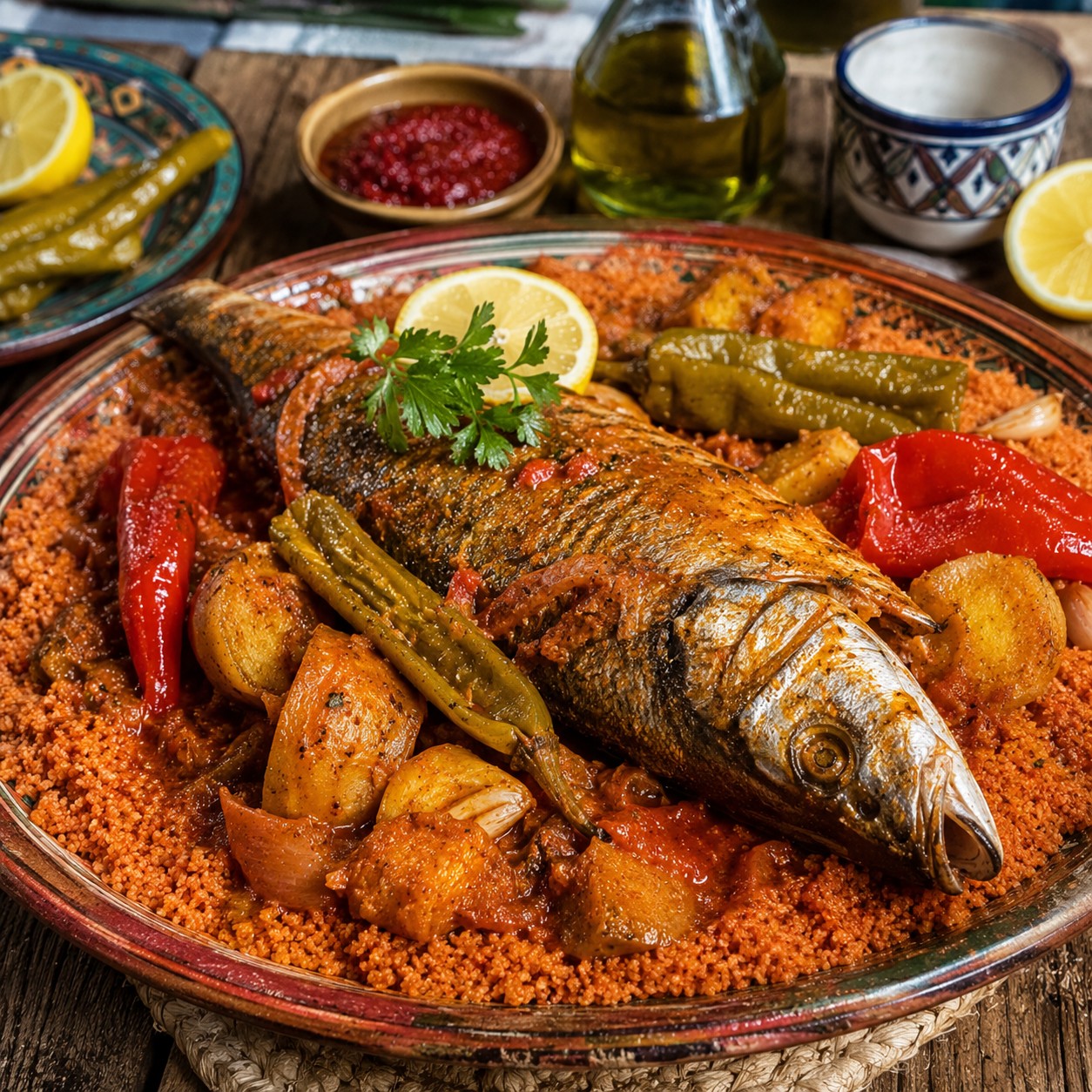
Couscous au Poisson
The coast's version — a whole fish, peppers and a saffron-warmed broth, built around the morning's catch.
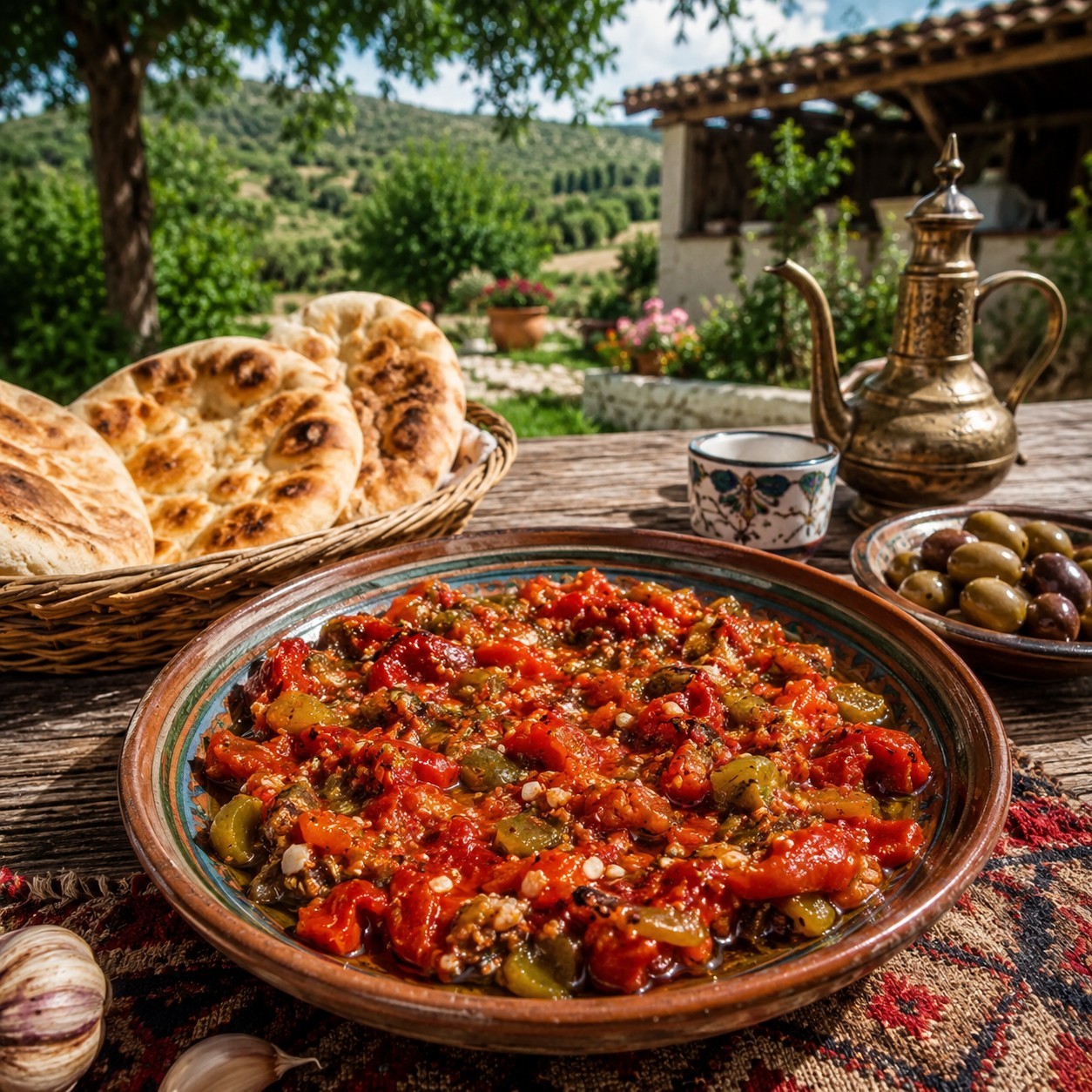
Slata Mechouia
Peppers and tomatoes charred over flame, then dressed simply in olive oil. Smoke, sweetness, and not much else.
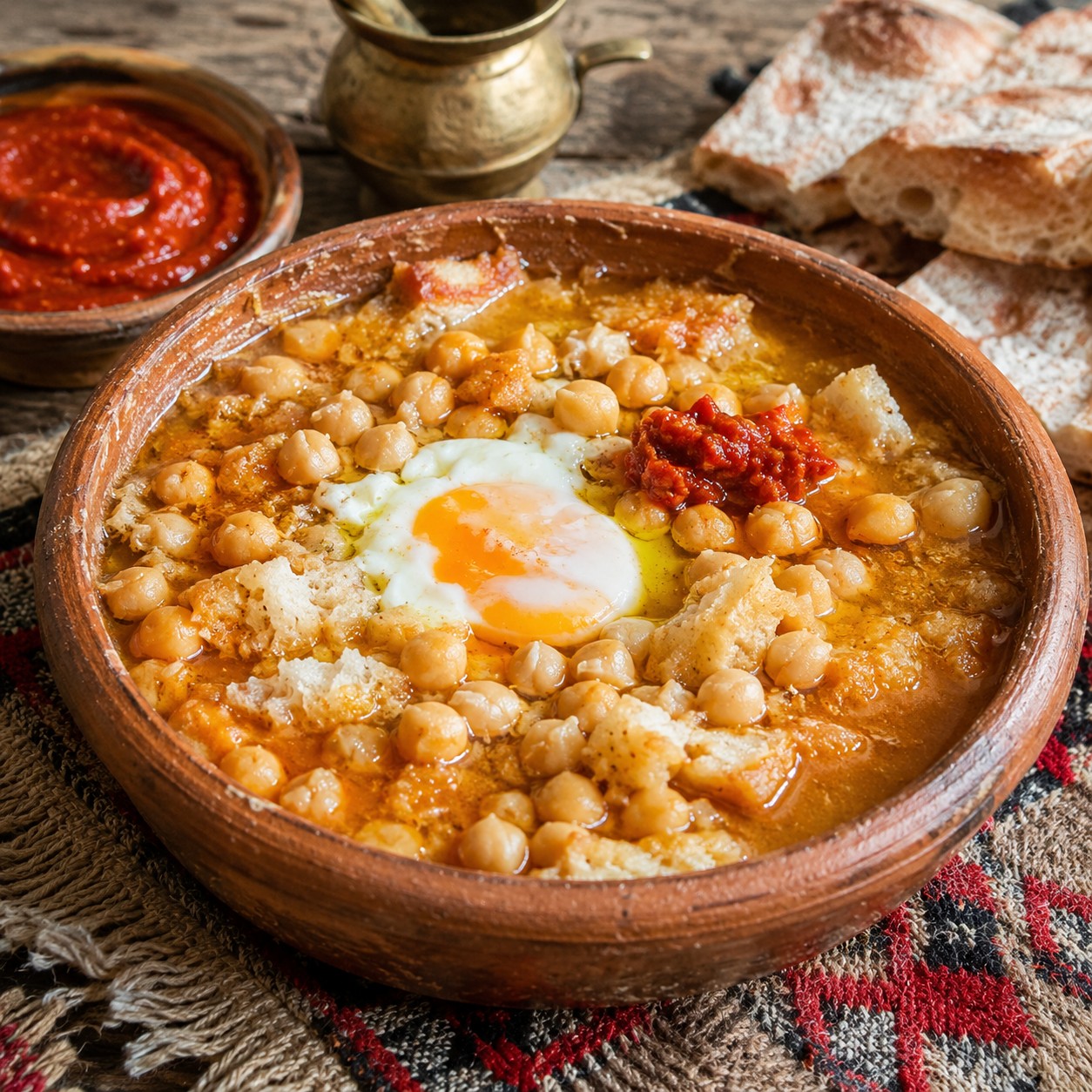
Lablabi
A chickpea broth ladled over day-old bread with cumin, harissa and a soft egg — Tunisia's everyday comfort food.
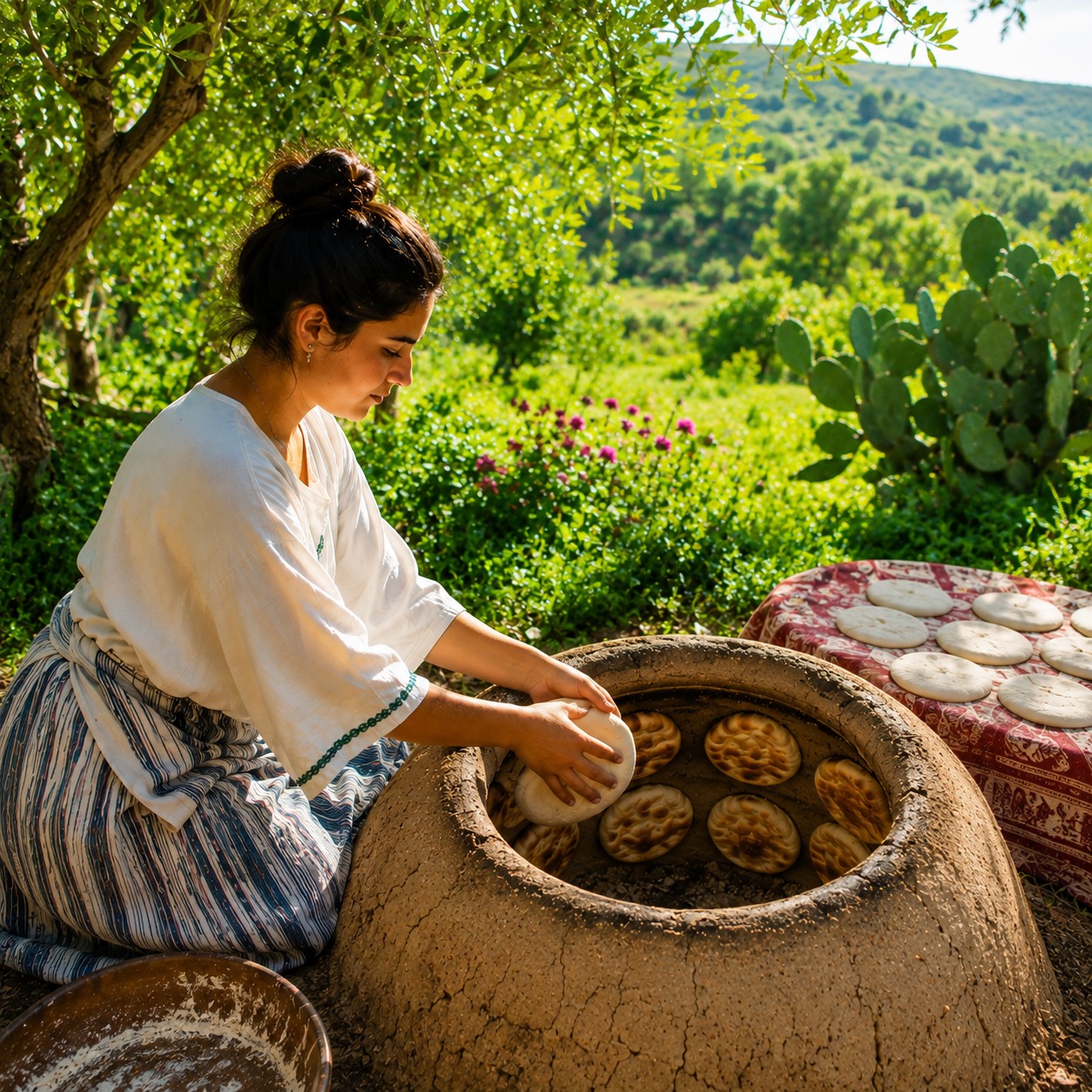
Tabouna Bread
Baked in a traditional clay oven — the bread that starts nearly every Tunisian table.
Farmers, fishermen, cooks, olive growers.
None of this pantry means much without the people who grow, catch and cook it.
Meet the PeopleThe science, in the Journal.
Longer essays on Mediterranean eating, Tunisian ingredients, and what credible research actually says.
Read the Journal